Marking of Plastics
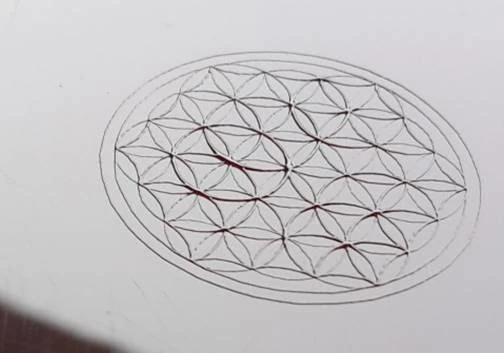
Futonics thulium fiber lasers are suitable for precise marking and engraving of transparent, colored and opaque plastics. Laser marking is performed contact-free and without inks, labels or additional consumables. This creates permanent, high-quality markings with fine details, high readability and strong contrast.
Due to the high beam quality and precise focusability of Futonics lasers, even small plastic components, complex geometries and hard-to-reach areas can be reliably marked or engraved. The process is suitable for technical plastics with different pigments, additives and surface structures.
Advantages of laser marking compared with conventional methods
Conventional plastic marking often uses inks, labels, embossing processes or mechanical engraving tools. These methods may require additional consumables, mechanical contact or complex process steps. Labels can be damaged, printed markings can fade and mechanical processes can place stress on the component.
Laser marking and laser engraving of plastics with Futonics fiber lasers provide a contact-free, wear-free and reproducible alternative. Markings can be generated directly on the plastic component without mechanically stressing the product. This makes the process particularly suitable for industrial series production, component traceability, product identification and high-quality technical labeling.
Why Futonics lasers are suitable for plastic marking
High-quality plastic marking requires beam quality, process control and suitable interaction between the laser radiation and the material. Futonics thulium fiber lasers enable precise energy delivery and fine structuring of the surface. Depending on the plastic, pigmentation and process parameters, high-contrast markings, engravings, codes, logos and technical labels can be created.
The high level of detail makes Futonics lasers particularly suitable for applications requiring small marking areas, fine lines, high readability or permanent identification. Typical markings include serial numbers, batch numbers, Data Matrix codes, QR codes, logos, scales, symbols and technical product information.
Typical applications
- Marking of plastic components
- Laser engraving of technical plastics
- Serial numbers and batch numbers
- Data Matrix codes and QR codes
- Logos, symbols and technical labels
- Electrical and electronic components
- Automotive components
- Tools and tool handles
- Buttons, switches and keyboards
- Packaging materials
- Small plastic products with fine details
- Component identification for traceability and quality assurance
Advantages of marking and engraving plastics with Futonics lasers
- Contact-free marking without mechanical stress on the plastic part
- No inks, labels or additional consumables required
- Permanent and high-quality markings
- High level of detail for logos, codes, texts and symbols
- Suitable for transparent, colored and opaque plastics
- Marking of small components and hard-to-reach areas possible
- Wear-free process without mechanical engraving tools
- Reproducible results for industrial series processes
- Easy integration into industrial systems and OEM platforms
Technical consulting for plastic marking
Whether a plastic can be marked or engraved with a Futonics thulium fiber laser depends on the material, pigmentation, additives, surface structure, desired contrast and marking geometry. Futonics supports you in evaluating your application and selecting a suitable laser module for laboratory, industrial or OEM systems.
PLASTIC ENGRAVING WITH A SCANNER SYSTEM
Recommended Laser
400 W Thulium Fiber Laser
- Up to 400 W continuous power
- 2 µm wavelength range
- Excellent beam quality
- Reliable industrial operation